




The More Life Company Corp. (CSE: MLCO; OTCID: TMLCF) has announced encouraging results from an independently conducted field trial of its licensed Agrarius™ plant-signaling technology on potato crops in Brazil, with the leading application programs delivering numerical yield increases of up to 32.5% in special-grade potatoes and up to 27.6% in total yield compared to untreated controls.
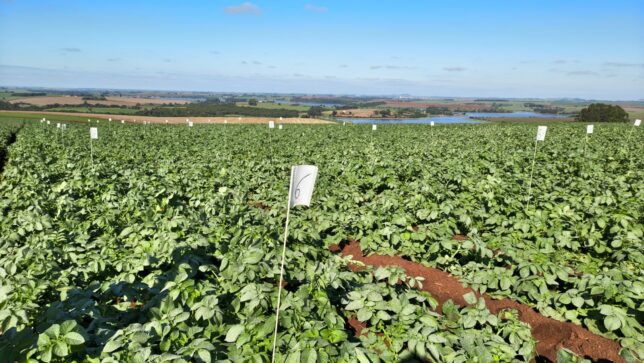
The trial was designed and run independently by G12 Agro Serviços Agropecuários Ltda., a Brazilian agricultural research and consulting firm, in Itaí, São Paulo. Researchers used a randomized complete block design across six treatment programs and four replications on the Orquestra table-potato cultivar, tracking stand count, total yield, and tuber classification — including the commercially valuable special grade measuring 45 to 70 millimetres.
Post-Emergence Timing Stood Out
Of the programs tested, those applying Agrarius after crop emergence produced the strongest results. A single application at 25 days after emergence delivered the trial’s highest total yield — 41.1 tonnes per hectare versus 32.2 for the control, a 27.6% increase. A two-application program at 25 and 45 days after emergence produced the highest special-grade yield, at 32.6 tonnes per hectare against 24.6 for the control — a 32.5% gain.
Notably, the treated crop also skewed toward the higher-value grade: special-grade potatoes made up roughly 80.7% of total yield in the two-application program, compared to 76.4% in the control. Field observers also noted thicker, more resistant skin on treated tubers, though skin quality and shelf life weren’t formal endpoints of this study and will need separate evaluation.
Grower Economics
The company estimates the 8.0-tonne-per-hectare special-grade gain from the top-performing program equates to roughly 320 extra 25-kilogram bags per hectare — worth an illustrative US$4,400 in incremental gross crop value per hectare, based on a per-bag price of roughly US$13.75. The company cautions this is illustrative only and doesn’t account for input costs, market fluctuations, or actual realized returns.
“We see this as a very encouraging result because it combines independent execution, a randomized field design and a commercial crop outcome that growers would be expected to immediately understand,” said Dennis Hancock, President and CEO of The More Life Company.
Spiros Fournogerakis, the company’s VP of LATAM Operations, echoed that view, calling the scale of the potential farm-level benefit “a commercially relevant outcome for growers and distribution partners across the region.”
The result builds on a separate 2025 trial in which Agrarius-treated potatoes yielded 51.25 tonnes per hectare against 43.25 in controls — an 18.5% increase — though the company notes the two trials used different protocols and shouldn’t be read as direct replications.
What Is Agrarius, and Why Organic Matters
Agrarius is a certified organic plant-signaling product, listed by the Organic Materials Review Institute (OMRI) in the United States. Rather than functioning as a conventional fertilizer or pesticide, it is designed to activate a plant’s own natural “defence mechanisms” at the cellular level — without the actual environmental stress that would normally trigger them. According to the company, treated plants respond by growing deeper roots and opening up their foliage to make fuller use of photosynthesis, which in turn is intended to support stronger growth hormones, more efficient use of water and nutrients, and greater resilience to pests, disease and climate stress.
The product is applied as a liquid concentrate, mixed with water (or blended with other inputs such as fertilizers, pesticides or herbicides) and sprayed onto crops at specific points in the plant’s lifecycle — in this trial, at 25 and/or 45 days after emergence. The company has reported yield improvements ranging from roughly 10% to 50% or more across a range of crop types it has tested to date, alongside potential reductions in fertilizer use.
Because Agrarius is certified organic rather than a synthetic chemical input, its organic status may be particularly relevant to growers and buyers looking to boost yields without moving away from organic or lower-input farming practices — a distinction the company has highlighted as it builds out field evidence across additional crops and geographies.
Industry Reaction
Henry Rowlands, Executive Director of the Association for Advanced Crop Protection, welcomed the findings as a sign of growing rigor in the sector: “Independent, randomized trials like this one are exactly what growers need to make informed decisions about new crop technologies. The fact that this program not only lifted total yield but shifted more of the harvest into the higher-value special grade is the kind of practical, farm-level evidence agronomists look for before recommending adoption.”
The More Life Company says it plans to use the results to refine Agrarius application protocols and support further commercial conversations with growers and distributors, with additional crop-specific trial data expected in the coming months.

(1 votes, average: 5.00 out of 5)
 Loading...