

The fastest-growing certification in food and supplements across the U.S. and Canada has nearly tripled in market size in a single year as shoppers reward brands that prove how clean their products are.
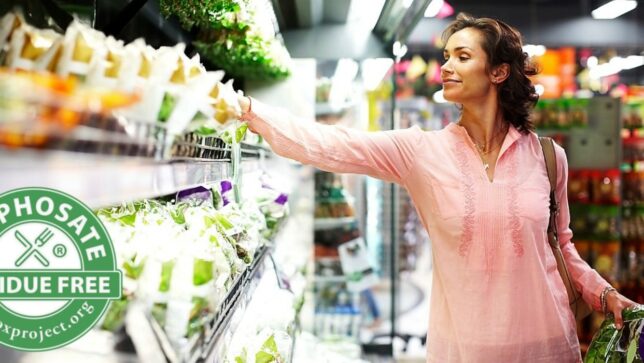
The market for products certified Glyphosate Residue Free (GRF) has grown 180% year-on-year to reach $2.8 billion, The Detox Project reported this week, citing independent point-of-sale data from SPINS – cementing its position as the fastest-growing certification in the food and supplements space in the U.S. and Canada. No other on-pack seal has come close to this pace of growth – a remarkable rise for a program that was a niche label only a few years ago.
At the same time, the first sales data for CleanScan, The Detox Project’s QR-code certification for heavy metals, pesticides and other contaminants, shows certified products have already reached $120 million in sales.
Together, the two programs point to a clear shift in the market: shoppers no longer take “natural” or “clean” on trust. They want independent lab testing, and they are rewarding the brands that provide it.
From $1 billion to $2.8 billion in 1 Year!
The previous SPINS report, covering Q3 2025, put the GRF certification market at $1 billion. Since then, growth has exploded. The latest figure of $2.8 billion represents a 180% increase on the previous year – close to a threefold rise in twelve months, and a pace that outstrips every other food and supplement certification in the U.S. and Canada.
These figures come from SPINS, the leading data provider for the natural, organic and specialty products industry. Founded in Chicago in 1995, SPINS measures real point-of-sale scanner data from around 110,000 stores across natural, conventional and specialty retail, as well as e-commerce.
That is why the numbers carry weight. They are not survey estimates or sales figures supplied by the brands themselves. They record what shoppers actually paid for at the checkout, measured by an independent third party with no stake in the certification.
SPINS is also the industry’s reference point for product attributes. Its Product Intelligence links certifications, claims and ingredients to each product’s sales, and its classifications set the standard for how the natural products industry is defined. That is what makes it possible to isolate exactly how much shoppers spend on products carrying the Glyphosate Residue Free seal – and it is why brands, retailers and investors across the sector rely on SPINS data to make decisions.
Three forces are driving the surge:
- Consumers are reading labels harder than ever. Concern over pesticide residues, heavy metals and so-called “forever chemicals” has moved from niche wellness circles into the mainstream grocery aisle.
- Retail buyers are using certifications as a filter. A third-party seal backed by regular lab testing gives buyers a simple way to choose between thousands of products all claiming to be “clean”.
- New categories are joining. GRF began in oats, grains and pulses. It now spans more than a dozen categories, from supplements, honey and plant-based milks to pasta, bone broth, snacks, personal care and even pet food.
From supplements to pet food: the seal is everywhere
Glyphosate Residue Free is no longer an oats-and-grains label. Today the seal appears across more than a dozen categories, carried by household names, fast-growing challenger brands and even major retailers’ own lines – including Walmart’s bettergoods and Thrive Market.
Certified products now span dietary supplements, protein and collagen, plant-based milks and creamers, oats, cereals and granola, pasta, bread and bakery, beans, pulses and hummus, honey and Manuka honey, bone broth and soups, plant-based and meat proteins, snacks, bars and chocolate, oils, spreads and sauces, personal care – and even pet food.
The hundreds of brands carrying the seal include MegaFood, AG1, Oatly, Califia Farms, Chobani, Jovial, Kettle & Fire, Beyond Meat and Ritter Sport.
Retailers are backing the seal too. Online grocer Thrive Market lets its members search specifically for Glyphosate Residue Free certified products, and has certified a range of its own Thrive Market label products. Walmart has also started to certify some of their Bettergoods private label products.
In the cereal aisle, grain-free brand Lovebird is among the brands that have certified.
“Cereal has a reputation problem, and honestly, a lot of it is earned,” said Parker Brook, Founder & CEO at Lovebird Foods. “We set out to make a bowl people could feel genuinely good about, and that means being clear about what isn’t in it, too. The Glyphosate Residue Free seal turns a promise into something you can actually check, which is exactly what today’s shoppers are asking for.”
CleanScan: $120 million in its first year of data
CleanScan takes the GRF idea a step further. Instead of a single claim on the pack, a QR code links shoppers to the product’s own test results for heavy metals, pesticide residues and other contaminants. It also helps baby food brands comply with California’s AB 899, which requires heavy metal test results to be made available to consumers.
The first SPINS data for the program shows CleanScan-certified products have reached $120 million in sales.
Premium pasta brand Taste Republic is among the brands putting their test results in shoppers’ hands – and one of a growing number carrying both the Glyphosate Residue Free seal and CleanScan.
“When people are choosing our premium pasta, they deserve to know exactly what’s in it,” stated Steve Ciurczak, VP of Sales at Taste Republic. “Being certified Glyphosate Residue Free tells them we’ve tested for one of the most widely used chemicals in farming. CleanScan goes further – anyone can scan a pack of Taste Republic and see the independent lab results for pesticides themselves. Clean shouldn’t be a marketing claim. It should be something you can verify.”
Why glyphosate is always in the spotlight
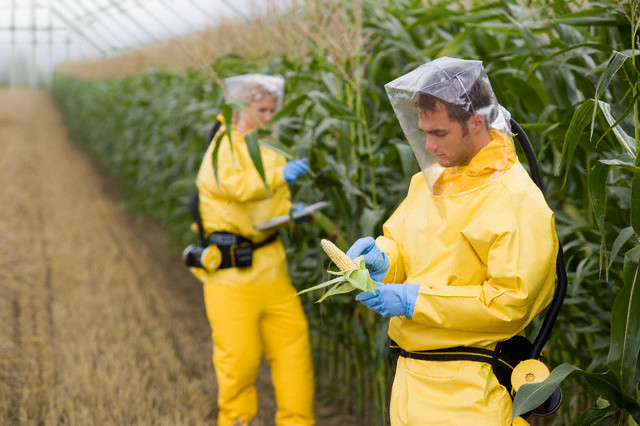
Glyphosate is the world’s most widely used herbicide. It is sprayed on crops and often applied just before harvest as a drying agent on oats, wheat and pulses – which is how residues end up in everyday foods and drinks.
Public concern has been building for a decade:
- In 2015 the World Health Organization’s International Agency for Research on Cancer classified glyphosate as “probably carcinogenic to humans”.
- In 2020 Bayer agreed to pay more than $10 billion to settle lawsuits claiming its glyphosate-based weedkiller Roundup caused non-Hodgkin lymphoma.
- A growing body of research links glyphosate-based herbicides to harm to pollinators, soil life and, in recent studies, hormones linked to pregnancy health.
“Three years ago this was a promising niche certification. Today it’s a $2.8 billion market, and CleanScan is showing the same pattern from day one,” said Henry Rowlands, Director of The Detox Project. “Brands have learned that proving their products are clean – with real lab data – is one of the most powerful things they can do. Every certified product on the shelf also sends a message back up the supply chain: farmers who grow without these chemicals have a market waiting for them.”
About Glyphosate Residue Free certification
Glyphosate Residue Free certification verifies that a food, supplement, beverage or personal care product does not contain residues of glyphosate. Certified products are tested regularly by a third-party ISO 17025-accredited laboratory, and must show no glyphosate residues down to government-recognized limits of detection (usually 0.01 ppm). View certified products.
About CleanScan
CleanScan is The Detox Project’s QR-code certification for heavy metals, pesticide residues and other contaminants. Each certified product carries a code that links shoppers to its independent lab results, helping brands demonstrate transparency and meet requirements such as California’s AB 899.
About The Detox Project
The Detox Project is a research and certification platform that encourages transparency in our food system. It runs the Glyphosate Residue Free and CleanScan certification programs.

(2 votes, average: 5.00 out of 5)
 Loading...