

US Government scientists have concluded with high confidence that glyphosate and glyphosate-based herbicides (GBHs) such as Roundup damage male reproductive health, in a systematic review ordered by the Department of Health and Human Services (HHS) and published this month in the journal Environment International.
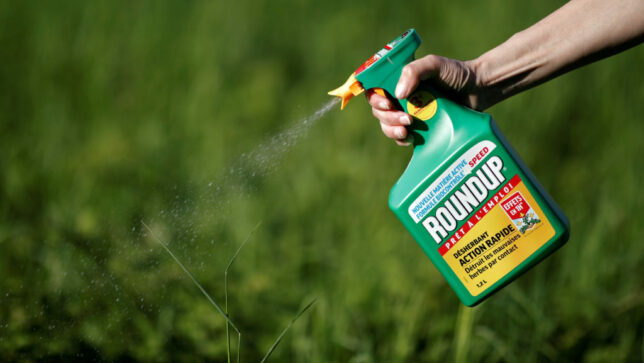
The review, carried out by the Division of Translational Toxicology at the National Institute of Environmental Health Sciences (NIEHS), pooled 55 animal studies. It found that glyphosate and the commercial formulations people are actually exposed to consistently reduced sperm numbers, cut the proportion of sperm able to swim, increased the proportion of malformed sperm, and lowered testosterone.
Crucially, the authors note that the lowest doses at which effects were reported overlap the acceptable daily intake of 0.5 mg/kg of body weight per day set by the European Food Safety Authority (EFSA) and the reference dose of 1.75 mg/kg of body weight per day set by the US Environmental Protection Agency (EPA) — the levels those agencies treat as safe for lifetime human exposure.
Ordered by HHS, funded by the NIH
The review was initiated in response to a November 2025 request from HHS to evaluate the association between glyphosate, GBHs and male reproductive toxicity, on a rapid timeline. The protocol was finalised in February 2026 and updated in May 2026. The paper was accepted by the journal on 9 November 2026.
Eight of its 19 authors are NIEHS scientists. The other 11 are staff of ICF, the Virginia-based consultancy contracted to run the literature search, screening, data extraction, risk-of-bias assessment and meta-analysis. The work was funded entirely through the NIEHS Intramural Research Program at the National Institutes of Health — no industry or foundation money was involved — and the authors declared no competing financial interests.
All underlying data, including the risk-of-bias judgements for every study, have been published in the public HAWC systematic review platform. The internal report delivered to HHS is not public.
Sperm damage across species
The team searched PubMed, Web of Science, Scopus and the Chinese databases CNKI and Wanfang through April 2026, screening more than 19,000 references down to 55 eligible studies. Thirty-one examined GBHs, 18 glyphosate alone, and six both.
For glyphosate alone, 10 of 11 studies across the three main sperm categories reported impaired sperm health. For GBHs, 16 of 18 studies reported higher percentages of abnormal sperm, 12 of 14 reported reduced motility, and 13 of 17 reported reduced sperm count or concentration.
Some individual effects were large. In juvenile rats fed glyphosate at 2 and 50 mg/kg per day, the percentage of abnormal sperm rose by between 40 and 700 percent over 60 and 120-day exposures, with signs of both dose- and duration-dependence.
The meta-analyses found a statistically significant reduction in sperm motility for GBHs (standardised mean difference −2.92; 95% CI −4.40 to −1.43; p = 0.001), and significant reductions in sperm concentration for both glyphosate (SMD −0.57; p = 0.015) and GBHs (SMD −2.92; p = 0.01). Sperm count fell for both, reaching significance for GBHs once two outlier studies were excluded.
Effects were most consistent where exposure began in juvenile or adult animals and lasted 30 days or more — a threshold the authors link to the length of a full sperm production cycle, which takes 27 to 52 days in rats and 25 to 35 days in mice.
The reviewers rated their confidence as high that both glyphosate and GBHs harm overall sperm health and reduce sperm abundance, and high that GBHs reduce sperm motility and increase abnormal morphology. Confidence was moderate for glyphosate alone on motility and morphology.
Testosterone down in rats, mice and gerbils
The review found consistent evidence that both glyphosate and GBHs lower circulating testosterone, with the clearest signal where animals were dosed as juveniles or adults rather than in the womb.
Seven of 12 glyphosate studies reported a significant decrease or a downward trend. For GBHs, 13 of 23 studies reported significant decreases, and among high-quality studies dosing for 30 days or longer, six of seven adult studies found testosterone fell. Effects appeared in rats, mice and gerbils.
Pooled estimates were significant for both exposures — glyphosate SMD −1.77 (p = 0.047) and GBH SMD −0.76 (p = 0.004) — and remained significant after outlier studies were removed. Confidence was rated moderate rather than high, chiefly because studies that began exposure during gestation produced inconsistent results.
Effects at doses regulators call safe
Across the body of evidence, effects on sperm or testosterone were reported at glyphosate doses from 0.5 to 3,393 mg/kg per day, and GBH doses from 0.17 to 2,000 mg/kg per day. The lower end of that range overlaps both the EFSA acceptable daily intake and the EPA reference dose.
The authors are careful to say this was a hazard identification exercise, not a formal dose-response assessment, and that establishing the exposure level likely to cause harm in humans was beyond its scope. They also note that some studies found effects in the 0.5 to 2 mg/kg per day range while others at the same doses did not.
Human exposure is near-universal. The review cites US surface water glyphosate concentrations of 0.02 to 427 µg/L and National Health and Nutrition Examination Survey data showing more than 70 to 80 percent of the US population aged six and over had detectable urinary glyphosate between 2013 and 2018. Around 280 million pounds of glyphosate were applied annually in US agriculture between 2012 and 2018, with a further 21 million pounds a year used on residential areas, roadsides and forestry sites.
Same harm from the active ingredient and the formulations
The review assessed glyphosate alone and commercial formulations separately, then compared them — and found the same adverse effects in both. That consistency, the authors argue, supports the conclusion that the reproductive effects of GBHs are driven at least in part by glyphosate itself, rather than solely by surfactants and co-formulants.
It does not clear the formulations. Surfactants can increase glyphosate uptake, and the reviewers could not quantify how much of the toxicity comes from other ingredients because they could not find out what those ingredients were. Exact GBH composition is treated as confidential business information, varies by product and region, and has changed over time — sometimes with chemically different products sold under the same brand name. Formulations tested in older studies, the review warns, may not represent what is on sale today.
Industry registration data sits outside the review
The reviewers were unusually frank about the gaps. Unpublished pesticide registration studies were not available to them, even though confidential guideline studies of glyphosate and GBHs with male reproductive endpoints are known to exist. Registration data, they note, are provided as incomplete summaries that do not allow the critical appraisal of methods a systematic review requires — leaving an entire body of industry-generated data out of the analysis. No mammalian studies of glyphosate’s metabolites were found at all.
Glyphosate Box
Glyphosate Residue Free Certification for Food Brands – Click Here
Test Your Food and Water at Home for Glyphosate – Click Here
Thirty-seven studies included testicular histopathology, normally the most sensitive measure of testicular toxicity, but that evidence was judged inadequate after expert review found poor tissue fixation, incorrect identification of lesions and misinterpretation of artefacts in many studies. Evidence was also rated inadequate for other hormones, for anogenital distance and preputial separation, and for testis and epididymis weights.
Tests for funnel plot asymmetry were significant for several endpoints, suggesting possible small-study effects, which the authors say should be interpreted cautiously. They also acknowledge that because the project began as an internal report for HHS, the protocol was locked before risk-of-bias assessment but not published at that stage — earlier publication, they write, would have improved transparency.
Human data comes next
This is phase one of a two-phase project and stops short of a claim about human health, concluding instead that the animal data provide a biologically plausible hypothesis that glyphosate and GBHs might affect male reproductive health in humans.
Phase two will widen the evidence base to human epidemiological studies, mechanistic data, and all vertebrate animal studies including fish and birds. The authors flag published evidence that glyphosate and GBHs may disrupt germ and somatic cell development, hormone and receptor function, oxidative stress pathways and inflammation — the plausible routes by which the documented effects would occur.
Source: Beverly BE, Howdeshell KL, Taylor KW, et al. Systematic review and meta-analysis of exposure to glyphosate and glyphosate-based herbicides (GBHs) and male reproductive health in mammalian animal models. Environment International (2026). doi: 10.1016/j.envint.2026.110604
Underlying data: HAWC assessment 1592
Cited from the journal pre-proof; final wording may change in the Version of Record.

(No Ratings Yet)
 Loading...