


Independent laboratory testing commissioned by Moms Across America, with the support of Children’s Health Defense Military Chapter and Centner Academy, revealed Wednesday that U.S. military food, including Meals, Ready to Eat (MREs) and other rationed and cafeteria items are contaminated with a mixture of toxic pesticides, banned veterinary drugs, beta-agonists and steroids used widely in U.S. beef and pork production for growth promotion, heavy metals, and glyphosate at levels that pose serious threats to human health.
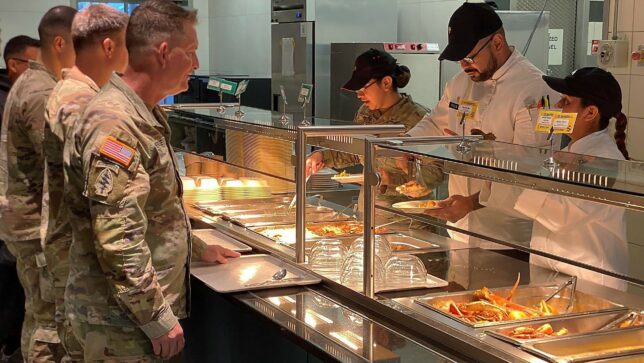
Each year, more than 1.5 billion U.S. military meals and 37 million Meals, Ready-to-Eat (MREs) are served to active-duty service members, making the U.S. military one of the most powerful purchasers and influencers in both the U.S. and global food supply. The health, readiness and security of U.S. troops depends on these meals to support physical performance, cognitive function, and long-term well-being.
The U.S. military seems to be lagging behind in the area of clean and safe food, as in 2014 the Chinese army ordered all military supply stations to only allow the purchase of non-GMO grain and food oil due to health safety concerns over GMOs and their associated pesticides, which have now been shown to be contaminating U.S. military food supplies.
“We applaud President Trump’s commitment to increasing the budget of the military to ensure Americans are safe and creating the most powerful military in the world,” said Zen Honeycutt, Founding Executive Director of Moms Across America.
“As our nation’s Commander in Chief, we call on him to be a true hero by ensuring our global power by providing the safest and healthiest meals of any military in the world. We are calling for American troops to have American food – regeneratively raised, organic meat and non-toxic, organic and nutrient-dense produce,” Honeycutt concluded.
The independent laboratory testing included 40 samples in total, with 16 samples from 6 military base cafeterias and 24 MREs being tested for toxic chemicals and nutrients. The samples contained ingredients such as wheat, GMO corn, GMO soy, and meat. The results included:
- Pesticides– 100% of military food samples tested contained harmful pesticide residues. Over 70% of samples contained multiple pesticides (ranging from 2-26) and as many as 15 to 26 different pesticide residues in a single item. A total of 62 pesticides and chemical mixtures were present, not evaluated for cumulative or synergistic health effects.
- Glyphosate– 95% of military food samples contained detectable levels of glyphosate/AMPA.
- Veterinary Drugs– 5 Veterinary drugs detected- including ractopamine and trenbolone acetate, growth promoting drugs used widely in US beef and pork production but banned in 160 other countries, including China, EU and Russia; 3 other drugs found are banned in most countries or not approved for human use – showing likely contamination from imported meat.
- Heavy metals – 100% of samples tested contained arsenic, cadmium, lead, mercury, and aluminum. In some samples, arsenic, cadmium, and aluminum were found at levels 430%- 17,300% higher than the EPA’s drinking water guidelines.
“As a proud veteran of the United States Army, I understand firsthand the extreme physical and mental demands placed on our service members to remain mission-ready. Training, focus, and resilience are essential, and food plays a powerful role in supporting all three. It’s concerning that many service members are operating within food environments that do not consistently support their health or long-term well-being. Limited nutritional guidance and heavy reliance on ultra-processed foods reflect broader challenges within our food system — challenges that affect both military and civilian communities alike,” Charlene Guzman, Strategic Communications and Public Relations Lead at the Non-GMO Project, former USDA contractor, and Army Veteran stated in reaction to the testing results.
Glyphosate Box
Glyphosate Residue Free Certification for Food Brands – Click Here
Test Your Food and Water at Home for Glyphosate – Click Here
Test Your Hair for Glyphosate and other Pesticides – Click Here to Find Our Your Long-Term Exposure
“Our service members and their families make daily sacrifices in service to this country. In return, we have a responsibility to ensure they are properly nourished with food that supports strength, recovery, and long-term well-being. Providing access to clean, nutrient-dense food is not a luxury — it is a basic measure of care, dignity, and respect for those who serve,” Guzman concluded.


(6 votes, average: 4.50 out of 5)
 Loading...